Description
Grown in greenhouses from winter to spring, with ever-larger, sweeter varieties appearing. It is best enjoyed fresh.
いちご
ichigo
Strawberry
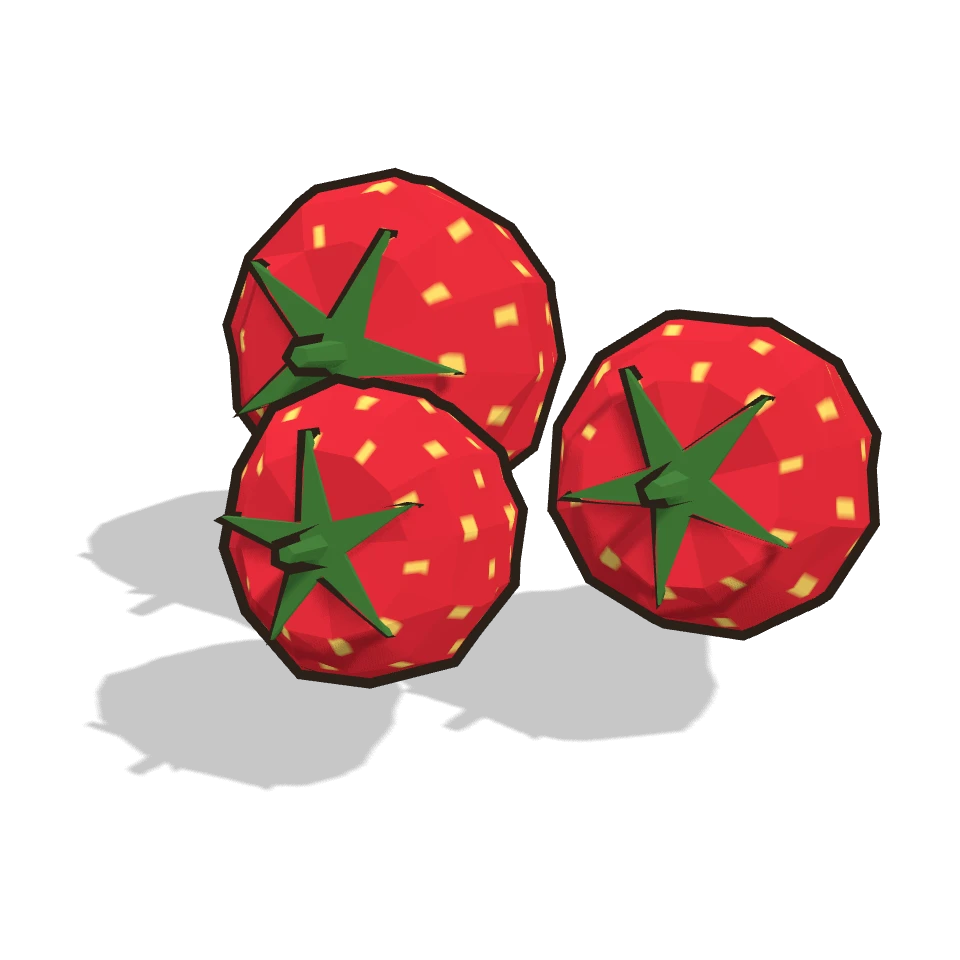
Grown in greenhouses from winter to spring, with ever-larger, sweeter varieties appearing. It is best enjoyed fresh.
Ichigo daifuku, strawberry and anko wrapped in mochi, is a recent sweet, born in the 1980s.
per 100 g edible portion
31 kcal
| Energy | 31 kcal |
|---|---|
| Water | 90 g |
| Protein | 0.9 g |
| Fat | 0.1 g |
| Carbohydrate | 8.5 g |
| Dietary fibre | 1.4 g |
| Salt equivalent | 0 g |
| Sodium | Tr mg |
|---|---|
| Potassium | 170 mg |
| Calcium | 17 mg |
| Magnesium | 13 mg |
| Iron | 0.3 mg |
| Zinc | 0.2 mg |
| Iodine | 1 µg |
| Vitamin A (RAE) | 1 µg |
|---|---|
| Vitamin D | 0 µg |
| Vitamin E (α-tocopherol) | 0.4 mg |
| Vitamin K | 2 µg |
| Vitamin B1 | 0.03 mg |
| Vitamin B2 | 0.02 mg |
| Vitamin B12 | 0 µg |
| Folate | 90 µg |
| Vitamin C | 62 mg |
Source: Standard Tables of Food Composition in Japan, 8th ed., 2023 supplement (MEXT) · food no. 07012 · Tr = trace · — = no data